扬州驾考科四英语模拟试题
1、The driver may turn right directly at this intersection.
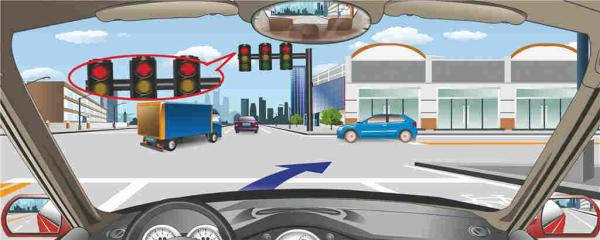
A. Right
B. Wrong
Answer:B
2、Drivers may go straight and pass through when traffic police give these hand signals.
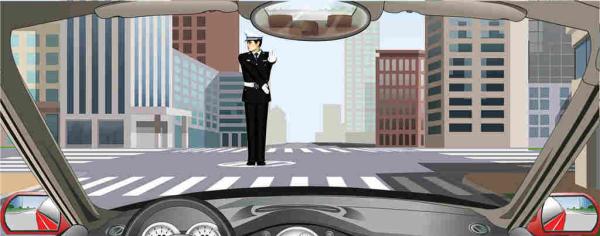
A. Right
B. Wrong
Answer:B
3、When a wounded person suffering burns is thirsty, he should only drink plain boiled water.
A. Right
B. Wrong
Answer:B
4、Which lamp should be turned on when motor vehicles pass through a road section at night where the street light condition is good?
A. Front and rear fog lamps
B. Low-beam
C. High-beam
D. Hazard lamp
Answer:B
5、The sign on the right warns of a narrowed road on both sides ahead.
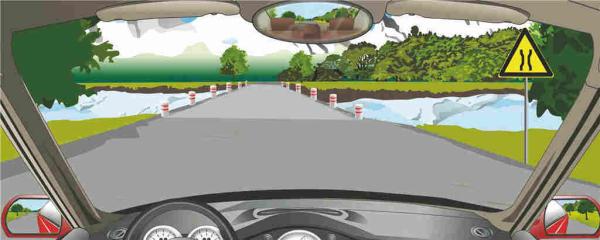
A. Right
B. Wrong
Answer:B
6、After a motor vehicle falls into water, the driver should immediately close the windows to prevent water from flowing into the compartment and to keep the air from flowing out. At the same time, he/she should make calls to tell the rescue personnel the place of the accident and wait for their arrival.
A. Right
B. Wrong
Answer:B
7、Drivers may turn left when traffic police give these hand signals.
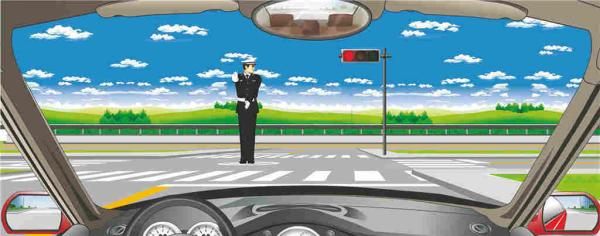
A. Right
B. Wrong
Answer:B
8、The sign on the right warns of an unguarded railway intersection ahead.

A. Right
B. Wrong
Answer:B
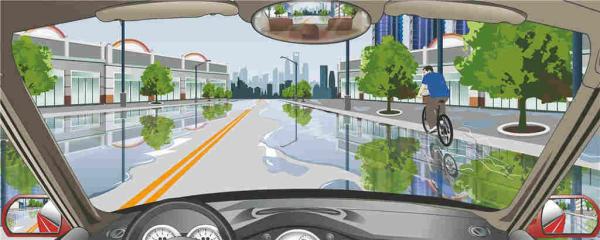
9、The motor vehicle should speed up and pass rapidly under this situation.
A. Right
B. Wrong
Answer:B
10、When a gas tanker is leaking heavily, which of the following measures is wrong?
A. Cut off the power
B. Wear gas mask and protect gloves
C. Turn off the valve to stop leaking
D. Evacuate people to the leeward side
Answer:D
11、When encountering this situation around a school, the driver should speed up and pass as quickly as possible.

A. Right
B. Wrong
Answer:B
12、When passing a sharp curve, motor vehicle drivers may overtake if there are few other vehicles on the road.
A. Right
B. Wrong
Answer:B
13、When the tire pressure is too low, what can happen when driving at a high speed?
A. Tire pressure will be unstable
B. Tire pressure will increase
C. Driving resistance will decrease
D. The tire will burst
Answer:D
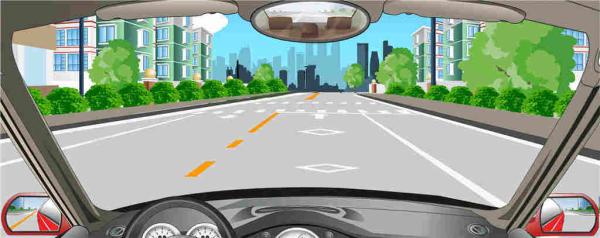
14、The diamond-shaped sign on the road indicates a crosswalk on the road ahead.
A. Right
B. Wrong
Answer:A
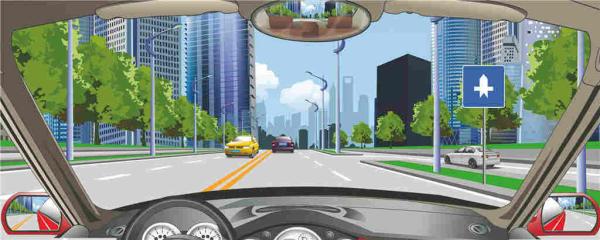
15、The sign on the right indicates that vehicles from the primary road have priority.
A. Right
B. Wrong
Answer:A
16、When a motor vehicle catches fire, the driver should swiftly turn off the engine and open the hood to extinguish the fire.
A. Right
B. Wrong
Answer:B
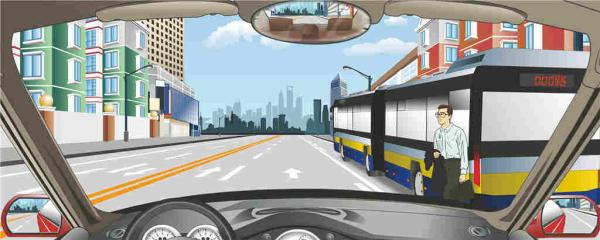
17、Motor vehicles should stop and yield rapidly when encountering this situation at a bus station.
A. Right
B. Wrong
Answer:A
18、Motor vehicle drivers should use the windscreen wiper when setting off on a rainy day
A. Right
B. Wrong
Answer:A
19、When a wounded person is beneath the wheel or cargo, we should help him out immediately by pulling the limbs of the wounded.
A. Right
B. Wrong
Answer:B
20、This sign indicates that vehicles can either drive straight or turn right at the fly-over junction ahead.

A. Right
B. Wrong
Answer:B