包头英语版驾考科目四
1、The sign on the right warns of low-lying road ahead.

A. Right
B. Wrong
Answer:A
2、Under such circumstances, what should motor vehicle drivers do?
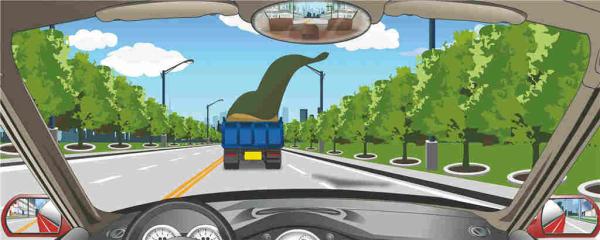
A. Follow the vehicle closely
B. Overtake the vehicle quickly on its left
C. Keep a long braking distance
D. Overtake the vehicle quickly on its right
Answer:C
3、The sign on the right warns of a wet road surface ahead.
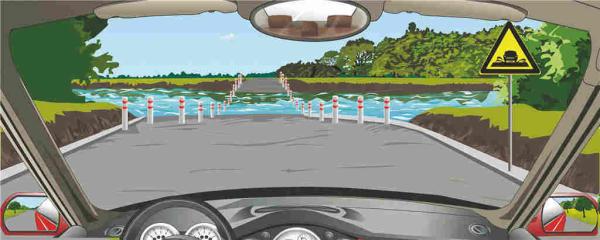
A. Right
B. Wrong
Answer:A
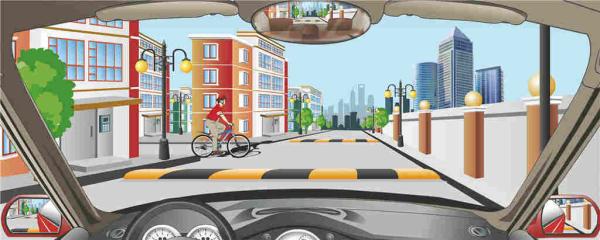
4、When encountering this situation in a residential area the driver should speed up and pass in front of the bicycle.
A. Right
B. Wrong
Answer:B
5、How should lamps be used when setting off in this situation?

A. Turn on the high-beam
B. Turn on the left indicator only
C. Turn on the left indicator and low-beam
D. Turn on hazard lamp
Answer:C
6、When driving on a road covered with ice and snow drivers should not use the emergency brake but can apply a sharp turn.
A. Right
B. Wrong
Answer:B
7、When the engine suddenly stalls on the road and cannot be restarted, the driver should apply emergency braking to force the vehicle to stop as fast as possible.
A. Right
B. Wrong
Answer:B
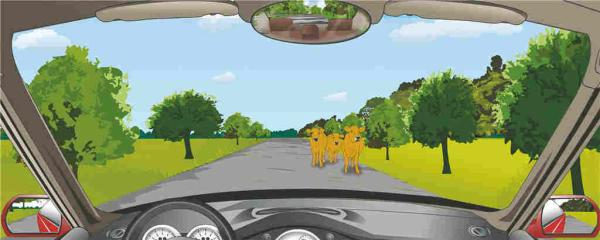
8、When driving on this section of the road, drivers should observe closely and prepare to yield to the animals crossing the road.
A. Right
B. Wrong
Answer:A
9、In the condition of low visibility, drivers should turn on the low-beam when setting off
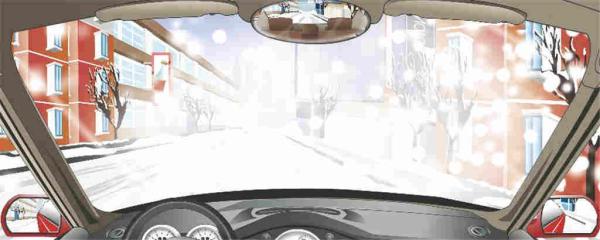
A. Right
B. Wrong
Answer:A
10、The sign on the right indicates that vehicles from the primary road have priority.
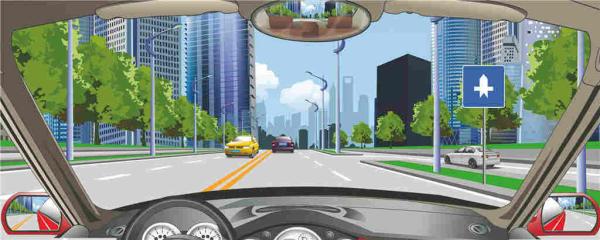
A. Right
B. Wrong
Answer:A
11、When a motor vehicle breaks down and cannot be moved away from the expressway, the driver and all passengers should stay in the vehicle and wait for the rescue personnel.
A. Right
B. Wrong
Answer:B
12、The sign on the right side warns of an emergency lane 500 meters ahead.
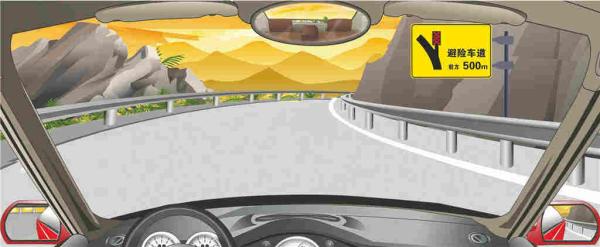
A. Right
B. Wrong
Answer:A
13、Which one of the following is the safest way when driving a motor vehicle on this kind of road surface?
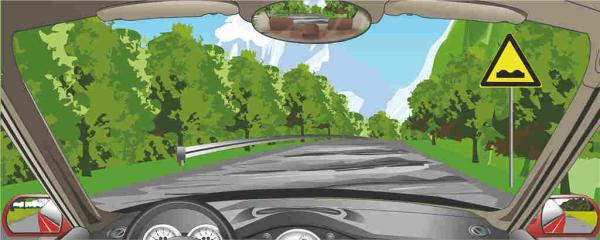
A. Slide over by using neutral gear
B. Pass with a high speed
C. Pass by speeding up
D. Pass with a low speed
Answer:D
14、On a mountain road, what should the driver do in this situation?
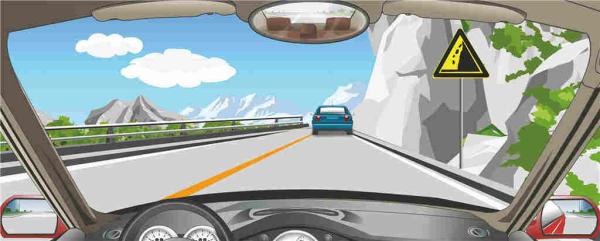
A. Drive on the left and speed up to bypass
B. Stop to observe and pass slowly
C. Observe closely and pass as soon as possible
D. Sound the horn several times and pass slowly
Answer:C
15、Drivers may cross these lane-dividing lines to change lanes in the same direction.
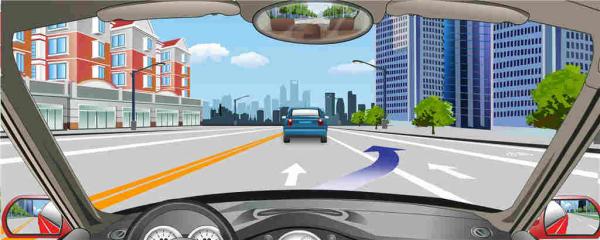
A. Right
B. Wrong
Answer:B
16、When a motor vehicle breaks down and has to be stopped on the highway, what should the driver do?
A. Set up a breakdown warning sign 150 meters behind the vehicle
B. Set up a breakdown warning sign 100 meters behind the vehicle
C. If it happens at night, turn on the clearance lamp and rear position lamp
D. Turn on the hazard lamps
Answer:ACD
17、The broken white line rectangle area on the right side of the road indicates that long stopping is permitted here.
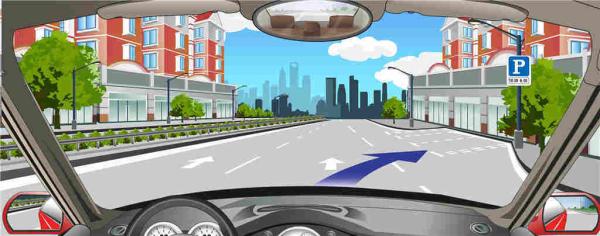
A. Right
B. Wrong
Answer:B
18、How should the driver use vehicle lights when the motor vehicle leaves a roundabout?
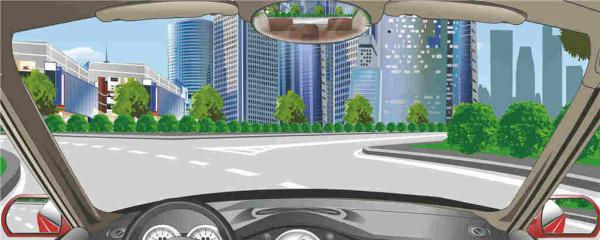
A. Turn on the left-turn indicator
B. Turn on the hazard lamps
C. No need to turn on any indicators
D. Turn on the right-turn indicator
Answer:D
19、The sign on the right indicates to stop and yield at the intersection ahead.
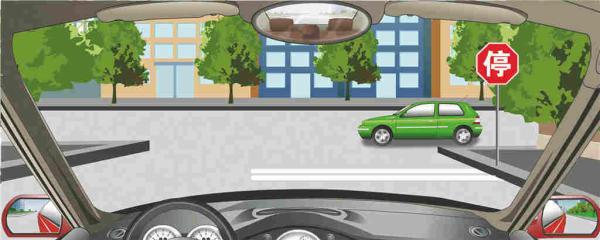
A. Right
B. Wrong
Answer:A
20、If a motor vehicle misses an exit on the expressway, the driver may reverse along the road shoulder.
A. Right
B. Wrong
Answer:B