延边科目四英语pdf
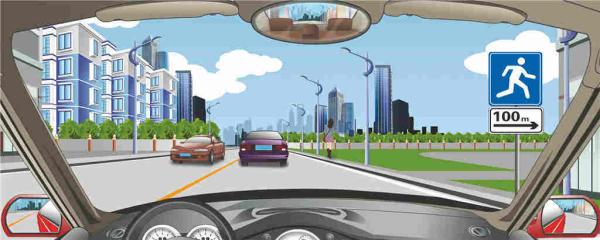
1、The sign on the right indicates an emergency shield 100 meters ahead.
A. Right
B. Wrong
Answer:A
2、When a tire suddenly bursts on the road, in which of the following ways can motor vehicle drivers keep safe?
A. Applying emergency braking and pulling over
B. Firmly holding the steering wheel and keeping the vehicle going straight
C. Immediately releasing the accelerator pedal
D. Gently depressing the brake pedal
Answer:BCD
3、After a motor vehicle falls into water, the driver should immediately close the windows to prevent water from flowing into the compartment and to keep the air from flowing out. At the same time, he/she should make calls to tell the rescue personnel the place of the accident and wait for their arrival.
A. Right
B. Wrong
Answer:B
4、When following other vehicles on a foggy day, what should the driver do?
A. Maintain a large safety distance
B. Turn on the high-beam
C. Turn on the low-beam
D. Sound the horn in due time
Answer:A
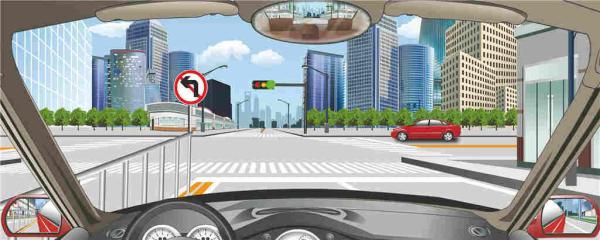
5、Motor vehicle drivers are allowed to make a U-turn at this intersection.
A. Right
B. Wrong
Answer:B
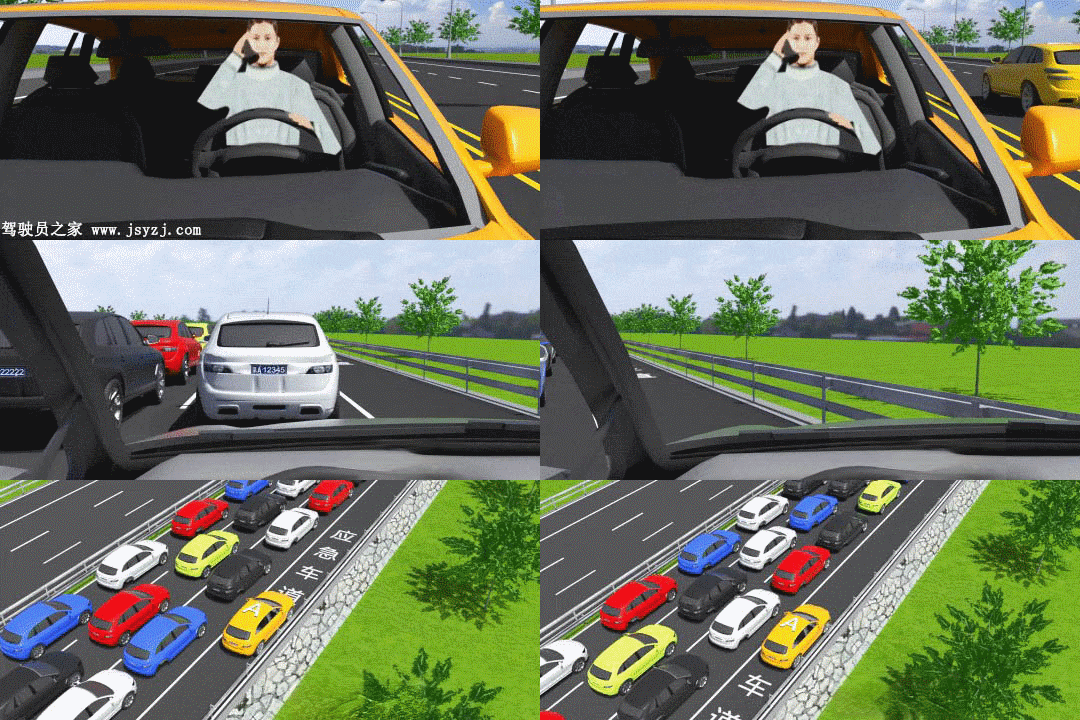
6、How many kinds of law-breaking acts are displayed in flash 6?
A. One
B. Two
C. Three
D. Four
Answer:C
7、When finding a tire suddenly burst on the road, the driver should firmly hold the steering wheel with both hands to ensure the vehicle goes straight.
A. Right
B. Wrong
Answer:A
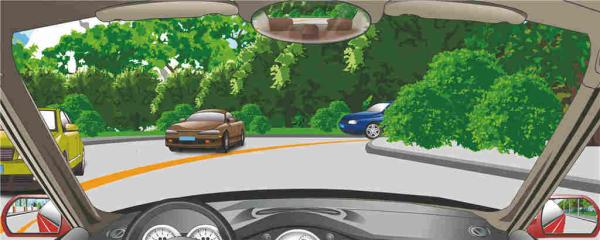
8、Under such circumstances, what should be done by motor vehicle drivers in order to maintain safe driving?
A. Sound the horn or turn on the headlamps
B. Reduce speed or drive on the right side
C. Keep to the central line as best as possible
D. Drive on the left side of the road
Answer:B
9、The sign on the right warns of a bumpy road ahead.
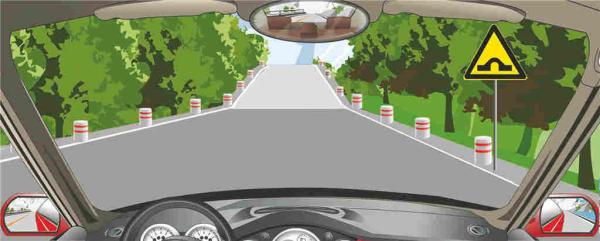
A. Right
B. Wrong
Answer:B
10、Motor vehicles on this kind of road are only allowed to overtake the vehicle in front from left.
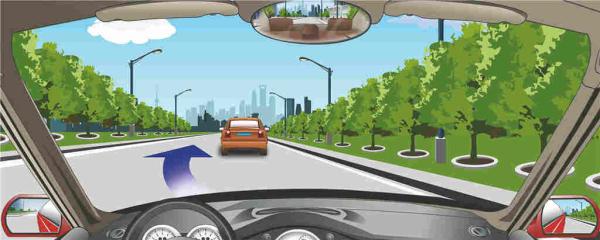
A. Right
B. Wrong
Answer:A
11、The sign on the right warns for disabled people ahead.

A. Right
B. Wrong
Answer:A
12、Dangerous chemicals possess the characteristics of explosion, inflammation, poison, erosion and radiation.
A. Right
B. Wrong
Answer:A
13、When driving on a foggy day, the driver should turn on the fog lamp.
A. Right
B. Wrong
Answer:A
14、If a motor vehicle deviates from the straight direction due to steering failure, what should be done by the driver in order to reduce speed and stop the vehicle as soon as possible?
A. Gently depressing the brake pedal
B. Pulling up the handbrake
C. Immediately changing to a low gear to reduce speed
D. Decisively and continuously depressing and releasing the brake pedal
Answer:D
15、The sign on the right indicates notice by sounding the horn.
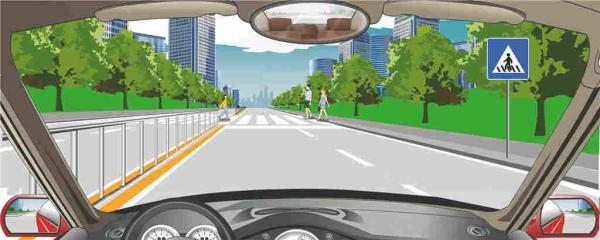
A. Right
B. Wrong
Answer:B
16、Under this circumstance, motor vehicle drivers should not reduce speed.
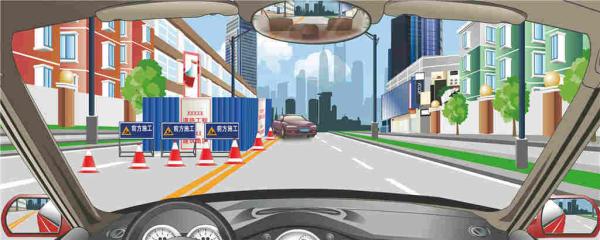
A. Right
B. Wrong
Answer:B
17、The guide arrow on the road surface of this lane indicates that only U-turns are permitted at the intersection ahead.
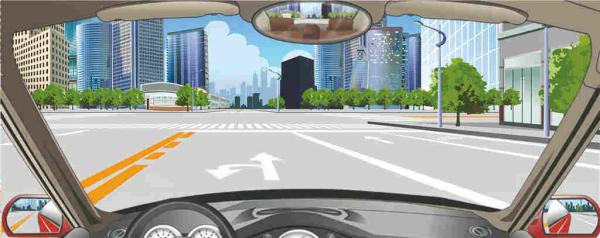
A. Right
B. Wrong
Answer:B
18、When a motor vehicle passes over an inundated road, what should the driver do for safe driving?
A. Slow down and drive with special care
B. Speed up and pass rapidly
C. Maintain a normal speed and pass through
D. Change to a low gear and speed up to pass
Answer:A
19、The sign on the right warns of a guarded railway intersection ahead.
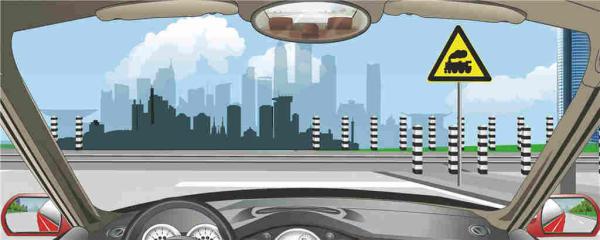
A. Right
B. Wrong
Answer:B
20、What should the driver do when seeing these hand signals.
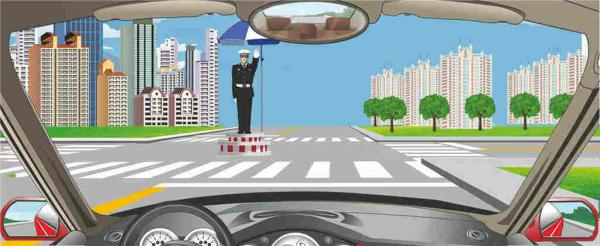
A. Stop and wait
B. Go straight and pass through the intersection
C. Turn right at the intersection
D. Turn left at the intersection
Answer:A