石家庄2026年摩托车科目四英文题库345题
1、What are the main reason for slow driving of motorized vehicles on rainy days?
A. Braking distance will increase
B. The driver?ˉs view islimited
C. Emergency braking can easily cause side skidding
D. Fast driving increases fuel consumption
Answer:ABC
2、If a driver finds there is no vehicle behind, he/she may change lanes without turning on the indicator.
A. Right
B. Wrong
Answer:B
3、Motor vehicle drivers may borrow a special lane for other vehicle types, if one exists, to overtake.
A. Right
B. Wrong
Answer:B
4、When putting out a fire disaster that gives out erosive steam or poisonous gas, the firefighters should wear gas masks and other related protective articles and should operate from the windward side.
A. Right
B. Wrong
Answer:A
5、When a vehicle encounters a strong side wind in a mountain valley, the driver should drastically turn the steering handlebar to adjust the direction of the vehicle if he feels the vehicle deviates from the normal direction.
A. Right
B. Wrong
Answer:B
6、The wrong method to rescue a poisoned person in a traffic accident is to ______.
A. Bring him to a place where air is fresh
B. Take off clothes that are exposed to toxic air
C. Clean exposed areas with clean water
D. Stay in the original place and wait for the rescue personnel
Answer:D
7、People who take a two-wheeled motorcycle should ride it by side way.
A. Right
B. Wrong
Answer:B
8、A light motorcycle is only permitted to carry preschoolers.
A. Right
B. Wrong
Answer:B
9、When passing a turn or a curve section, the driver should slow down and disengage the clutch.
A. Right
B. Wrong
Answer:B
10、When driving on a road covered with ice and snow, drivers tend to encounter glare caused by reflection of light rays from the road surface.
A. Right
B. Wrong
Answer:A
11、The motor vehicle should speed up and pass rapidly under this situation.
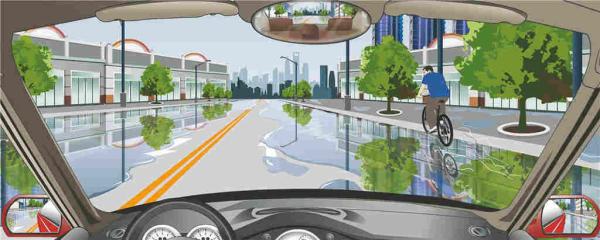
A. Right
B. Wrong
Answer:B
12、Drivers who ride motorcycles are able to not wear safety helmets.
A. Right
B. Wrong
Answer:B
13、What is the meaning of this sign?
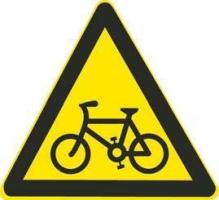
A. The lane for non-motorized vehicles
B. Yield non-motorized vehicles
C. No passing for non-motorized vehicles
D. Watch for non-motorized vehicles
Answer:D
14、When a motorcycle passing through an interchange discovers it has chosen a wrong route, it should immediately make a U turn from where it is or reverse to change route.
A. Right
B. Wrong
Answer:B
15、Violent wind can cause a sideways swerve to a running vehicle.
A. Right
B. Wrong
Answer:A
16、What are the hazards of drivers using cellphones or texting while driving?
A. Influencing driving operation
B. Influencing the rest of passengers
C. Failure to respond to emergencies
D. Distracted driving
Answer:ACD
17、When rescuing a wounded person who has been poisoned by toxic gas, the first measure is to send him/her to a place with fresh air so that he/she will not continue to be poisoned.
A. Right
B. Wrong
Answer:A
18、After setting off from the roadside, motor vehicle drivers should speed up as soon as possible and make a sharp left-turn in order to drive into the normal lane.
A. Right
B. Wrong
Answer:B
19、While driving a motorcycle, nothing is permitted to hang on the handlebars.
A. Right
B. Wrong
Answer:A
20、It is illegal to change lanes without turning on indicators.
A. Right
B. Wrong
Answer:A