包头驾考英文版科目四
1、When driving on an expressway in rain, the driver should slow down to avoid steering failure arising from water slide
A. Right
B. Wrong
Answer:A
2、For evading an emergency on an expressway, which of the following principles should drivers stick to?
A. Evading vehicles first and objects later
B. Evading people first and objects later
C. Evading vehicles first and people later
D. Evading objects first and people later
Answer:B
3、When encountering such a situation, the motor vehicle driver should change to the left lane rapidly.
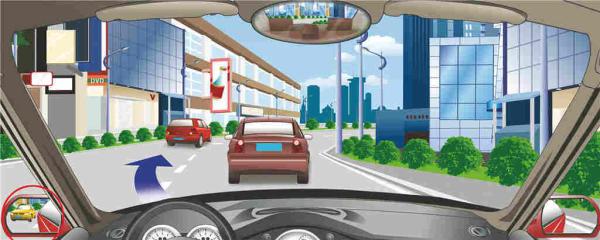
A. Right
B. Wrong
Answer:B
4、When a gas tanker is leaking heavily, which of the following measures is wrong?
A. Cut off the power
B. Wear gas mask and protect gloves
C. Turn off the valve to stop leaking
D. Evacuate people to the leeward side
Answer:D
5、When a motor vehicle has deviated from the straight moving direction and an accident is unavoidable, the driver should decisively and continuously depress the brake pedal so as to shorten the stopping distance and reduce the impact of vehicle collision.
A. Right
B. Wrong
Answer:A
6、When passing a sharp curve, motor vehicle drivers may overtake if there are few other vehicles on the road.
A. Right
B. Wrong
Answer:B
7、When driving on a muddy road, what should the driver do?
A. Try to avoid using the foot brake
B. Drive slowly in mid or low gear
C. Firmly hold the steering wheel
D. Speed up and pass through
Answer:ABC
8、What should the driver pay attention to when the motor vehicle on the main road approaches a junction with a feeder road?
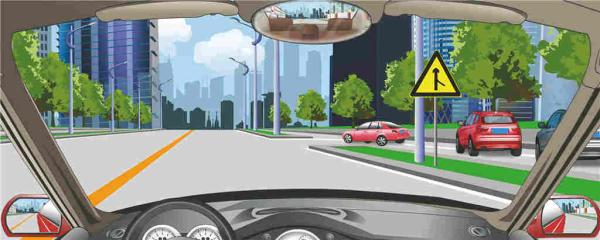
A. Slow down in advance and pay attention to other motor vehicles
B. Maintain the normal speed
C. Sound the horn and pass rapidly
D. Speed up and pass rapidly
Answer:A
9、When the engine suddenly stalls on the road and cannot be restarted, the driver should apply emergency braking to force the vehicle to stop as fast as possible.
A. Right
B. Wrong
Answer:B
10、When driving on a muddy road, what should drivers do if the wheels spin and slide?
A. Cover the ground under the wheels with gravels
B. Change to a high gear and speed out
C. Cover the ground under the driving wheels with gravels
D. Violently turn the steering wheel and suddenly speed up
Answer:C
11、What should the driver do when seeing these hand signals.
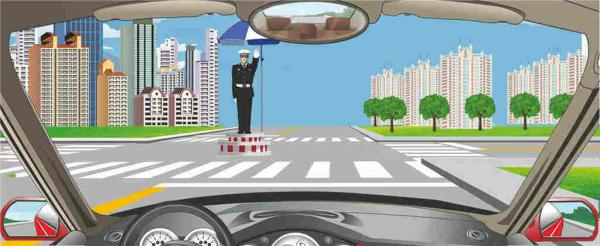
A. Stop and wait
B. Go straight and pass through the intersection
C. Turn right at the intersection
D. Turn left at the intersection
Answer:A
12、Under such circumstances, what should be done by motor vehicle drivers in order to yield to the pedestrians politely?
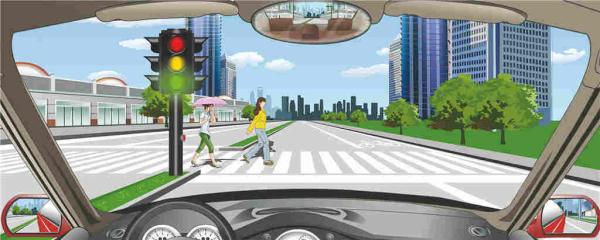
A. Set off after pedestrians pass
B. Set off and bypass in front of the pedestrians
C. Sound the horn to warn the pedestrians to yield
D. Set off and approach the pedestrians slowly
Answer:A
13、The sign on the right indicates that no restriction for temporary parking.
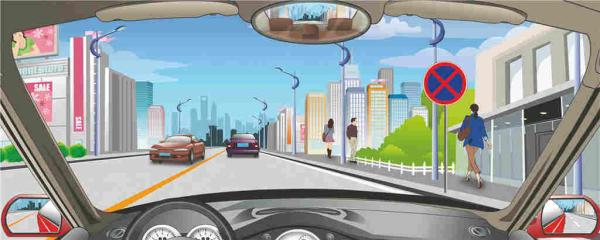
A. Right
B. Wrong
Answer:B
14、When driving on a foggy day, what kind of lamps should the driver turn on?
A. Fog lamp and hazard lamp
B. Fog lamp and indicator
C. Fog lamp and high-beam
D. Fog lamp and low-beam
Answer:A
15、Which of the following is a safe way for motor vehicles to pass the intersection marked with this sign?
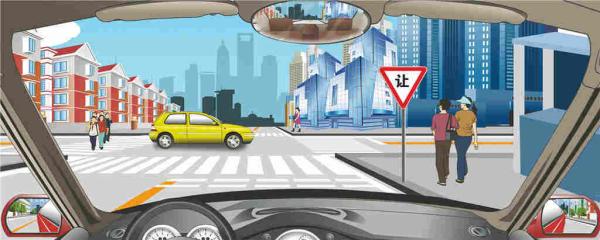
A. Stop and observe the traffic situation around the intersection
B. Approach the intersection by speeding up
C. Observe the traffic situation on the left rear side
D. Approach the intersection at a reduced speed
Answer:D
16、What is the meaning of the sign on the right?
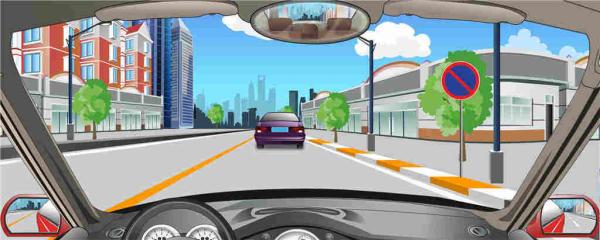
A. Long-time parking permitted
B. Temporary parking permitted
C. Long waiting for passengers permitted
D. No parking
Answer:B
17、Under such circumstances, motor vehicle drivers may sound the horn at the proper time and speed up to pass through.
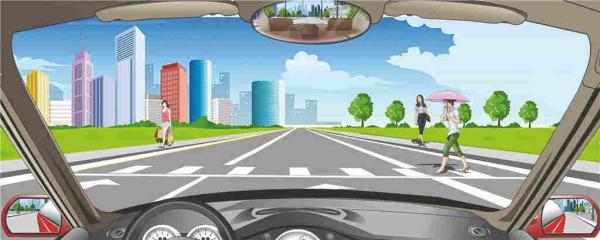
A. Right
B. Wrong
Answer:B
18、The sign on the right warns of children on the section ahead.
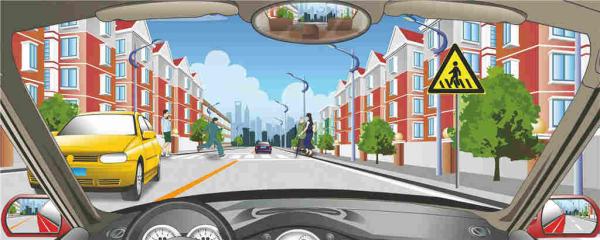
A. Right
B. Wrong
Answer:B
19、When a motor vehicle stops temporarily in a rainy day,which lamp should be turned on?
A. Front and rear fog lamps
B. Hazard lamps
C. Headlamps
D. Reverse lamps
Answer:B
20、The sign on the right warns of a guarded railway crossing 100 meters ahead.
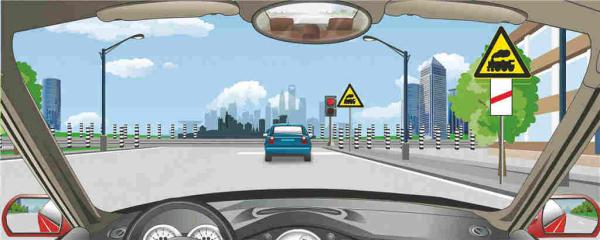
A. Right
B. Wrong
Answer:B