广州摩托车科目四英语
1、Where can not park?
A. Parking lot
B. Parking spaces on roads
C. Landslide and debris flow in Mountainous Areas
D. Crosswalk
Answer:CD
2、What should the driver pay attention to when the motor vehicle passes a school?
A. Observe the traffic signs and markings
B. Slow down and pass slowly
C. Prohibited from sounding the horn
D. Pass rapidly
Answer:ABC
3、When rescuing the injured, it is necessary to ________.
A. Save life first and treat the wounds later
B. Treat the wounds first and safe life later
C. Help the slightly wounded persons first
D. Help the seriously wounded persons later
Answer:A
4、When parking temporarily on a snowy day, drivers should turn on the headlamp and fog lamp.
A. Right
B. Wrong
Answer:B
5、In such road sections, you can enter the cross-hatched marking area to wait.
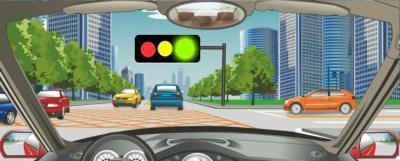
A. Right
B. Wrong
Answer:B
6、When encountering pedestrians slowly cross the road in a residential area, the driver should sound the horn continuously.
A. Right
B. Wrong
Answer:B
7、When overtaking on a rainy day, drivers should turn on headlamps and sound a long horn.
A. Right
B. Wrong
Answer:B
8、When a rear tire of a motorcycle blows out, the driver should ________.
A. Swiftly turn the steering handlebar to adjust
B. Firmly hold the steering handlebar with both hands
C. Swiftly turn the steering handlebar to the opposite direction
D. Swiftly take braking measures
Answer:B
9、What is the meaning of this sign?
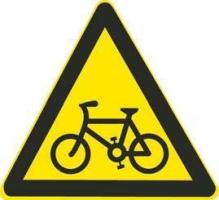
A. The lane for non-motorized vehicles
B. Yield non-motorized vehicles
C. No passing for non-motorized vehicles
D. Watch for non-motorized vehicles
Answer:D
10、When rescuing a person sustaining full-body burns the rescue personnel may spray cool water to his body to put out the fire.
A. Right
B. Wrong
Answer:B
11、How should lamps be used when a motor vehicle meets an oncoming bicycle on a narrow road or a narrow bridge at night?
A. Continuously change between low-beam and high-beam
B. Use clearance lamp
C. Use high-beam
D. Use low-beam
Answer:D
12、Speeding up to go though the intersection before the light turns to red in this case.

A. Right
B. Wrong
Answer:B
13、What is the meaning of this sign?
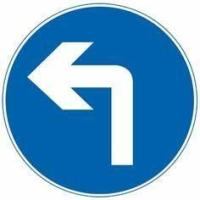
A. Turn left
B. No going straight
C. Straight-going lane
D. One-way road
Answer:A
14、What is the meaning of this sign?

A. Going straight and right turn
B. Going straight and left turn
C. No going straight and no left turn
D. Right turn and left turn only
Answer:B
15、Speed up and pass when encountering this traffic light at the intersection
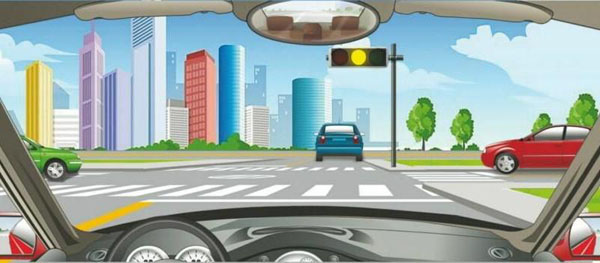
A. Right
B. Wrong
Answer:B
16、When the driver discovers a tire is leaking and steers the vehicle off the main carriageway, he should refrain from applying emergency so as to avoid a vehicle turnover or a rear-end collision arising from the late braking of the following vehicle.
A. Right
B. Wrong
Answer:A
17、How to ensure safe driving at night?
A. Drive at speed limit
B. Cut speed and drive carefully
C. Maintain the current speed
D. Drive above the speed limit
Answer:B
18、At a road that has more than two vehicle lanes in the same direction, the motorcycles should use the very left one.
A. Right
B. Wrong
Answer:B
19、It is not a bad habit for a driver to frequently change lanes.
A. Right
B. Wrong
Answer:B
20、When passing a turn or a curve section, the driver should slow down and disengage the clutch.
A. Right
B. Wrong
Answer:B